|
Getting your Trinity Audio player ready...
|
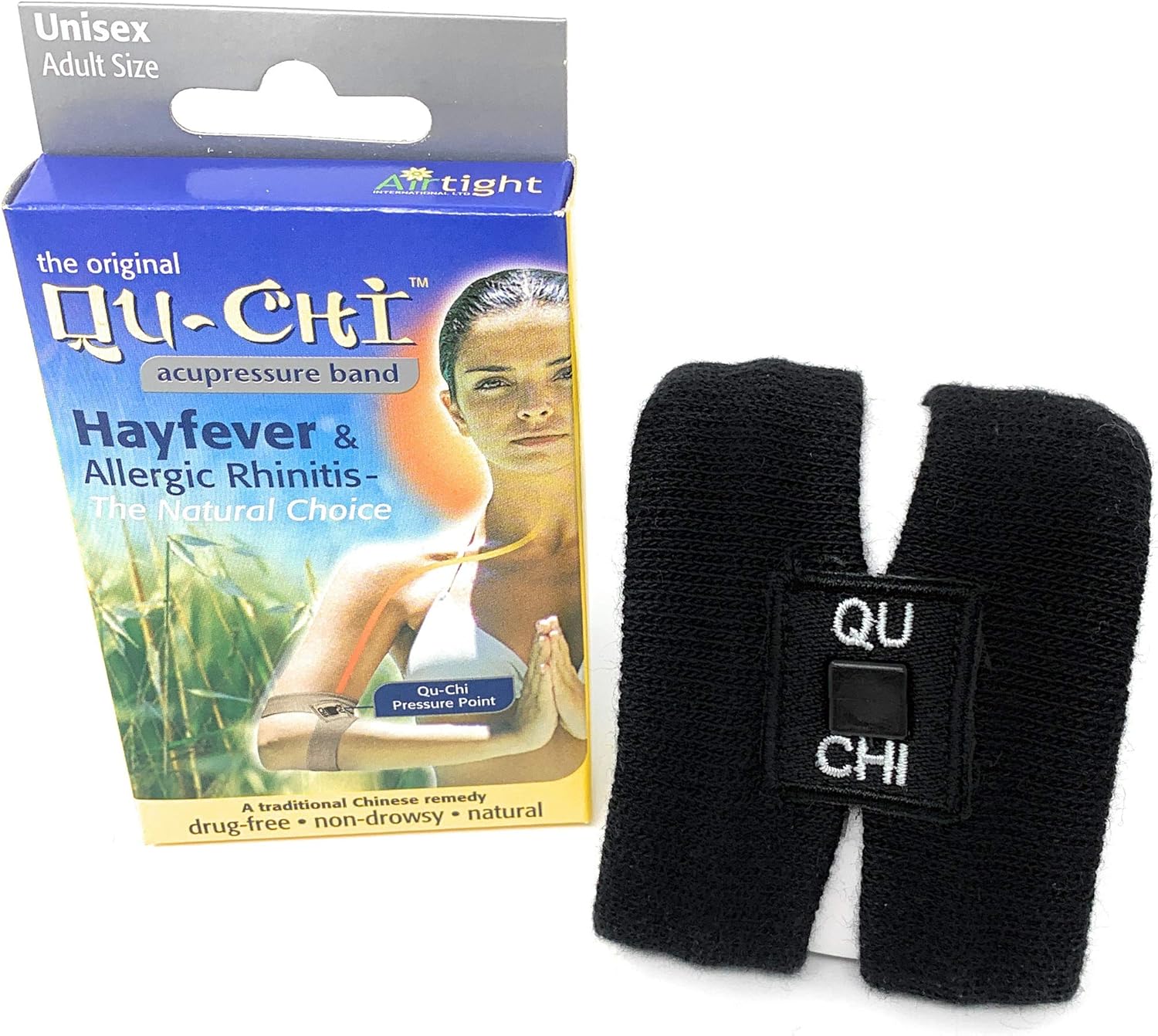
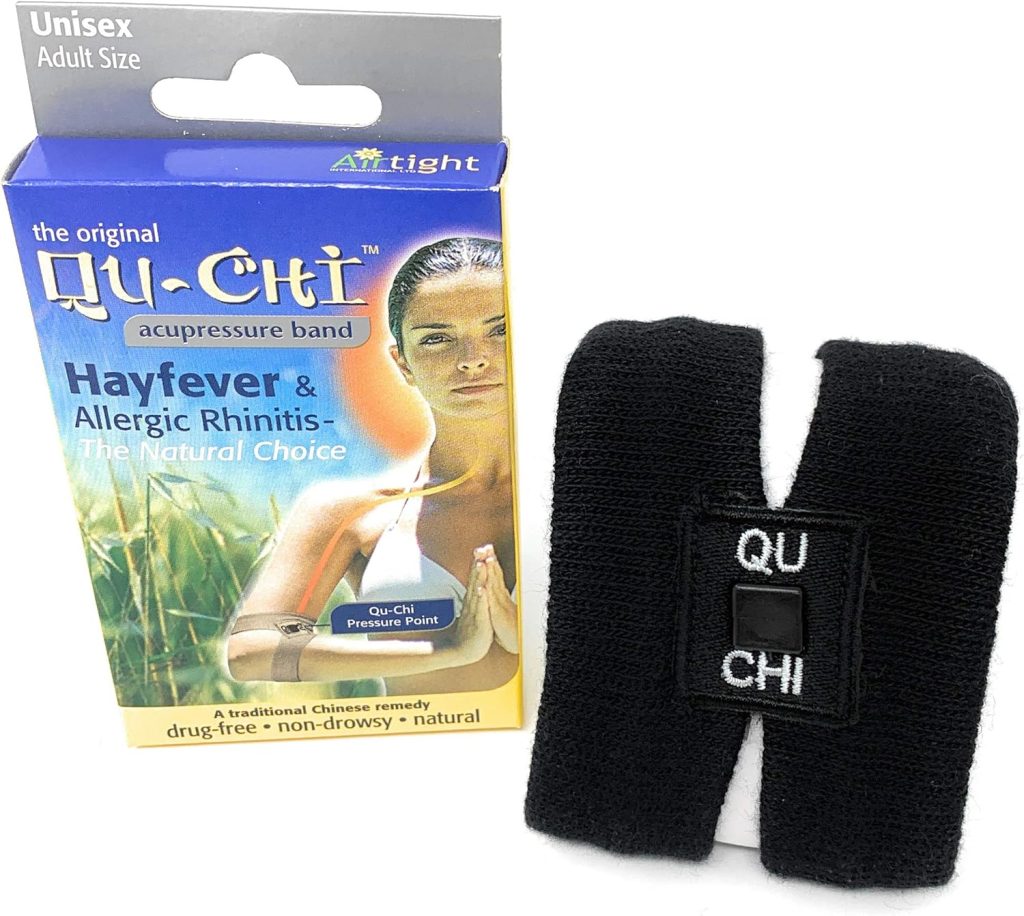
The Original Qu-Chi Hay Fever Band takes a very different approach to conventional hay fever products. Instead of tablets, sprays or eye drops, it is a simple acupressure armband designed to sit around the arm and apply continuous pressure to a specific point close to the elbow.
Developed by acupuncturist Andrew Broch, the Qu-Chi band targets the LI-11 acupressure point, also known as Quchi. According to the manufacturer, the intention is to provide a drug-free option for people looking for additional support when dealing with hay fever and allergic rhinitis symptoms. The band can be worn on either arm, during the day or at night, and can also be used alongside existing medication. ty is one of the biggest reasons people are interested in it. There are no batteries, no medication to remember and no complicated setup. You put the band on, position the pressure point correctly and get on with your day.
There is, however, an important distinction to make before going any further. Acupressure is a complementary approach rather than a guaranteed treatment for hay fever. Research into acupressure and allergic rhinitis has produced some encouraging findings, but studies have generally examined different forms of acupressure rather than this specific Qu-Chi armband. It would therefore be misleading to promise that wearing one will eliminate hay fever symptoms. e Qu-Chi Hay Fever Band particularly interesting to review. At around £13, it is inexpensive enough to try without making a significant investment, but is it genuinely practical, comfortable and worthwhile?
Quick Verdict
| Category | Verdict |
|---|---|
| Overall Rating | 4.0 out of 5 |
| Best For | Hay fever sufferers wanting a simple, reusable, drug-free complementary option |
| Short Summary | An inexpensive and impressively simple acupressure band that is easy to use and convenient to wear, although individual results will inevitably vary |
| Main Pros | Drug-free, reusable, no batteries, washable, discreet and inexpensive |
| Main Cons | Correct positioning matters, pressure can initially feel tight and effectiveness cannot be guaranteed |
| Buying Recommendation | Worth considering as a low-cost addition to your normal hay fever routine, particularly if you prefer non-medicated options |
The Qu-Chi Hay Fever Band gets many of the practical things right. It is simple, portable and considerably less intrusive than carrying several different hay fever products around.
The biggest question is obviously whether it will work for you. That is harder to answer universally. Experiences with complementary products can vary considerably, so our recommendation is to see Qu-Chi as an additional option rather than a replacement for proven hay fever treatments.
Product Overview Table
| Product Detail | Information |
| Product Name | The Original Qu-Chi Hay Fever Band |
| Brand | Qu-Chi |
| Product Type | Acupressure armband |
| Key Features | Continuous pressure on the LI-11 acupressure point, drug-free design, reusable, hand washable, daytime and overnight wear |
| Main Purpose | Designed as a complementary approach for people experiencing hay fever and allergic rhinitis symptoms |
| Price Range | Approximately £12.95 to £12.99 depending on retailer |
| Materials | Elasticated textile-style armband with an integrated pressure point. Exact fabric composition may vary or is not prominently specified |
| Best For | Adults and children looking for a simple non-medicated hay fever support option |
| Available Colours and Variants | Adult versions have been offered in colours including black, beige, pink and grey, with a dedicated child-size version also available |
Current listings put the Qu-Chi Hay Fever Band at approximately £13, although prices and colour availability can vary between retailers. The manufacturer also offers different sizes, including a children’s version. uild Quality
There really is not much to the Qu-Chi Hay Fever Band, and that is largely a compliment.
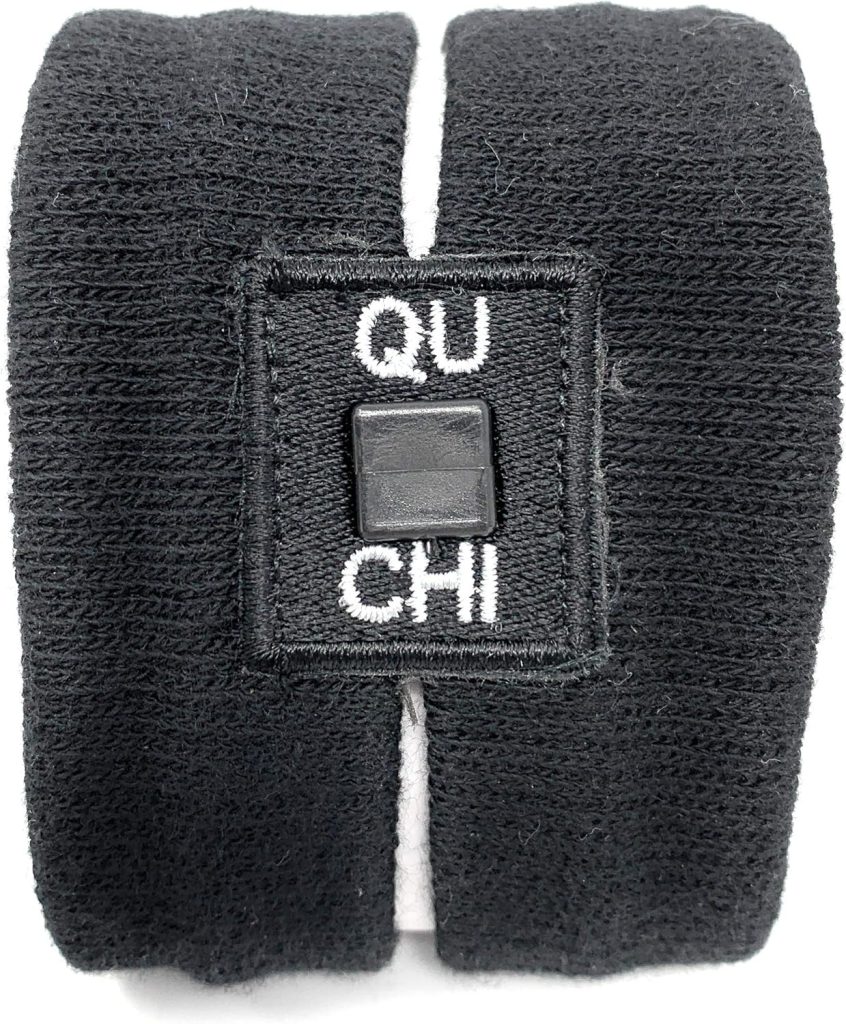
Rather than trying to turn acupressure into an unnecessarily complicated gadget, Qu-Chi has kept the design extremely straightforward. You have an elasticated band that sits around the arm and a small raised pressure point designed to rest against the LI-11 area close to the elbow.
It looks more like a compact sports support than a medical device, particularly in black or grey. That makes it relatively discreet under everyday clothing.
Anyone hoping for something luxurious may be slightly underwhelmed. This is a functional product rather than a premium fashion accessory. You are paying for the design and purpose rather than expensive materials or elaborate presentation.
Build quality feels appropriate for the price point. The band needs enough elasticity to maintain pressure without moving constantly, which naturally means it can feel quite snug when first worn.
That tightness is worth mentioning because positioning and fit have a big influence on the overall experience. A recent independent trial of the product also noted that the band initially felt extremely tight before becoming more comfortable with continued wear. ne line between enough pressure to keep the contact point where it belongs and making the band uncomfortable.
Once positioned properly, though, the Qu-Chi band is remarkably unobtrusive. There are no cables, switches, charging ports or disposable components.
Another useful feature is that it can be hand washed. That matters more than it initially sounds, especially if you are wearing it throughout spring and summer when temperatures are higher. eels appropriately made for what it costs. It is not an item that impresses through expensive materials, but neither does it need to be.
Features & Performance
The entire Qu-Chi concept revolves around one feature: sustained pressure on the LI-11 acupressure point.
The LI-11 point is located around the outer end of the elbow crease. The manufacturer explains that the raised contact point on the Qu-Chi band should be positioned over this area, allowing the band to apply pressure without you having to manually hold your finger there. ity perspective, that makes a lot of sense.
You could theoretically apply manual pressure yourself, but doing that repeatedly throughout the day would hardly be practical. The band essentially automates the process in the simplest possible way.
There is no lengthy setup procedure. Position it correctly, make sure the pressure point is sitting where intended and wear it.
The band can be worn on either arm and is designed for daytime or overnight use. The manufacturer also states that it may be worn alongside medication, meaning it does not have to be treated as an either-or decision. ity is arguably its strongest practical feature.
If you regularly take antihistamines, use nasal sprays or have another hay fever routine that already works reasonably well, adding the Qu-Chi band does not require completely changing what you are doing.
It is also completely silent, requires no batteries and produces no electronic notifications or other distractions.
Comfort is more subjective.
You need noticeable pressure for the design to serve its purpose, so expecting it to feel like a loose wristband would be unrealistic. For the first few wears, you are likely to remain aware that it is there.
Correct positioning also takes a little practice. Put it too high or low and the contact point will not be where intended. Positioning becomes quicker once you know where the band should sit.
As for hay fever symptoms themselves, this is where expectations need to remain realistic.
Research has examined acupressure techniques for allergic rhinitis, with some studies reporting improvements in symptoms and quality of life. However, those findings cannot automatically be applied to this particular armband, and responses to complementary therapies differ between individuals. nues to recommend established measures for managing hay fever, including reducing pollen exposure and, where appropriate, using treatments such as antihistamines and steroid nasal sprays. on, Qu-Chi makes the most sense as an additional tool rather than something you should rely on exclusively if you have significant allergy symptoms.
Real-World Experience
The most appealing thing about using something like the Qu-Chi Hay Fever Band is how little effort it requires once you have worked out the positioning.
Hay fever products can sometimes become a routine in themselves. Tablets need remembering, sprays need carrying around and eye drops are not always convenient when you are away from home.
A band on your arm is considerably simpler.
The first thing you notice is the pressure. This is not supposed to hang loosely around your arm, so there is a degree of tightness to get used to.
Initially, that can make you wonder whether you have positioned it correctly or whether it is simply too tight. After adjusting the placement, however, it becomes much easier to wear for extended periods.
Under a T-shirt, jumper or lightweight jacket, the band is also surprisingly easy to forget about.
That makes it particularly convenient for situations where hay fever traditionally becomes irritating. Walking the dog, gardening, travelling, spending the afternoon outdoors or simply sitting with the windows open can all expose you to more pollen.
Being able to put the band on without having to think about it again is one of its strongest qualities.
There is also something reassuringly low-tech about it.
There is nothing to run out, nothing to recharge and no consumable component that needs replacing every few weeks. If you find that the band helps you, you can continue using the same product throughout the hay fever season.
What you should not expect is a dramatic sensation that tells you the band is doing something.
There is no vibration, cooling effect or immediate physical response. You are essentially wearing it and assessing whether you notice a difference in how troublesome your symptoms feel.
That also makes judging effectiveness more complicated.
Hay fever symptoms fluctuate naturally according to pollen levels, weather, location and the amount of time you spend outdoors. If symptoms improve on one day and worsen on another, isolating one particular reason is difficult.
This is why we would be cautious about the dramatic claims sometimes associated with drug-free allergy products.
Interestingly, a recent independent reviewer who initially approached the Qu-Chi band sceptically reported fewer symptoms after using it, although they also noted initial discomfort from the tightness of the band. That is encouraging anecdotal evidence, but it remains one person’s experience rather than proof that everybody will get the same result. trongest argument in Qu-Chi’s favour is therefore not that it guarantees relief. It is that trying it involves very little inconvenience.
At around £13, there is a relatively low barrier to entry, and if acupressure is something you respond well to, the reusable nature of the product could make it surprisingly good value.
Pros & Cons Table
| Pros | Cons |
| Completely drug-free | Results are likely to vary between users |
| Simple to put on and use | Can initially feel quite tight |
| No batteries or charging required | Correct positioning takes some practice |
| Reusable over multiple hay fever seasons | Limited product-specific clinical evidence |
| Can be hand washed | Not suitable during pregnancy according to the manufacturer |
| Can be worn during the day or overnight | May be noticeable with short-sleeved clothing |
| Adult and child sizes available | Should not be viewed as a guaranteed replacement for established treatments |
| Compact and easy to travel with | People with severe symptoms may require more comprehensive allergy management |
| Approximately £13, making it relatively inexpensive to try | Effectiveness can be difficult to judge when pollen levels fluctuate |
Who Should Buy This?
The Qu-Chi Hay Fever Band is best suited to people who are curious about acupressure and want an inexpensive, drug-free option that can fit easily into their existing hay fever routine.
It is particularly appealing if you dislike swallowing tablets, want something that does not cause medication-related drowsiness, or simply want another option alongside the products you already use.
People who spend a lot of time outdoors may also appreciate the convenience. Once the band is on your arm, there is very little else to think about.
There is a dedicated children’s version, so parents looking for a non-medicated complementary option may also find Qu-Chi interesting. The manufacturer’s current information says the product is suitable for children, but the correct size should be chosen. rer states that the band should not be used during pregnancy. Anyone with concerns about allergies, circulation, skin sensitivity or existing medical conditions should seek appropriate professional advice rather than relying solely on a wearable product. as a gift? Potentially.
It is perhaps not the most glamorous present imaginable, but for somebody who complains every spring about hay fever ruining barbecues, walks and days outside, it could be a genuinely useful little gift.
People expecting guaranteed or medically proven symptom elimination, however, should look elsewhere.
Alternatives & Comparisons
There are broadly three types of alternative worth considering: conventional hay fever treatments, other acupressure bands and more expensive drug-free allergy devices.
Generic acupressure bands can sometimes be found for less money. The difficulty is knowing whether the pressure point positioning and fit have been designed specifically with the LI-11 point in mind.
Qu-Chi has been sold for many years and was developed specifically around this particular acupressure point, which gives it more credibility than an unbranded elastic band making similar claims. The manufacturer says the product was created by acupuncturist Andrew Broch and launched after his work with the LI-11 point. end of the scale are electronic allergy relief devices, which can cost several times more. These may appeal to people wanting a more technology-led solution, but they also represent a larger financial commitment.
Then there are conventional hay fever treatments.
Antihistamine tablets, eye drops and nasal sprays have a stronger position within mainstream allergy management. The NHS specifically recommends speaking to a pharmacist about treatments such as antihistamines or steroid nasal sprays when necessary. nd does not really need to compete directly against these products.
Its strongest role is as a reusable complement to a broader hay fever strategy.
Is It Worth The Money?
At approximately £13, we think the Qu-Chi Hay Fever Band is fairly priced.
You are essentially paying the price of a couple of boxes of branded hay fever products for something that can potentially be reused season after season.
There are no replacement cartridges, batteries, subscription fees or ongoing purchases.
That creates strong long-term value if you enjoy wearing it and feel that it makes a difference.
Even if you remain unsure about the acupressure element, the financial risk is fairly limited compared with more expensive alternative allergy devices.
The caveat is that you should be comfortable spending around £13.99 without any guarantee of symptom improvement.
Some people may notice a difference. Others may notice very little.
That variability prevents us from calling it outstanding value for everybody, but as a reusable complementary product it is reasonably priced and accessible.
This is available on Amazon.


Final Verdict
The Original Qu-Chi Hay Fever Band is one of those products that initially sounds almost too simple.
There is no medication, battery or sophisticated technology. It is simply an elasticated band designed to maintain pressure over the LI-11 acupressure point close to your elbow.
Yet that simplicity is exactly what makes it appealing.
It is easy to use, reusable, washable, compact and inexpensive enough for most hay fever sufferers to try without a major financial commitment.
We particularly like the fact that it does not force you to abandon your existing hay fever routine. It can simply sit alongside the measures you already take.
The biggest limitation is equally straightforward. Nobody should expect guaranteed results.
Research around acupressure for allergic rhinitis is interesting, but evidence relating specifically to this particular armband is limited. Anyone dealing with persistent or severe hay fever should continue to follow appropriate medical advice and speak to a pharmacist or GP where necessary. lso require an adjustment period because the band needs to apply firm pressure to remain correctly positioned.
Despite those reservations, we think the Qu-Chi Hay Fever Band offers enough practical advantages to make it genuinely worth considering.
For around £13, it is a low-maintenance, reusable and refreshingly uncomplicated addition to your hay fever toolkit.
Overall rating: 4.0 out of 5.
FAQs
Does the Qu-Chi Hay Fever Band actually work?
The Qu-Chi band is based on acupressure and applies pressure to the LI-11 point near the elbow. Some research into acupressure techniques for allergic rhinitis has shown promising results, but this does not prove that the Qu-Chi band itself will work for everyone. Individual experiences are likely to vary. u wear a Qu-Chi Hay Fever Band?
The band is worn around the arm close to the elbow, with the integrated pressure point positioned over the LI-11 acupressure point. It can be worn on either arm. Correct positioning is important, so it is worth following the instructions supplied with the product.
Can you wear the Qu-Chi band all day?
The manufacturer says the Qu-Chi Hay Fever Band can be worn during the day and overnight. If the band feels excessively tight, causes pain, affects circulation or irritates your skin, it should be removed rather than simply tolerated. ren use the Qu-Chi Hay Fever Band?
Yes. A dedicated child-size Qu-Chi band is available. Using the appropriately sized product is preferable to trying to make an adult band fit a much smaller arm. the Qu-Chi band with antihistamines?
The manufacturer states that the band can be used alongside existing medication. It is best viewed as a complementary product rather than automatically replacing antihistamines, nasal sprays or other treatments recommended by a healthcare professional. -Chi Hay Fever Band washable?
Yes. Current manufacturer information states that the band can be hand washed, which is useful if you are wearing it regularly throughout spring and summer. does a Qu-Chi Hay Fever Band last?
There is no battery or disposable active ingredient to expire through normal daily use. How long the physical band lasts will depend on wear, washing and how well the elastic retains its shape. Looking after it carefully should help extend its usable life.
Is the Qu-Chi Hay Fever Band suitable during pregnancy?
No. The manufacturer’s current guidance specifically states that the Qu-Chi Hay Fever Band is not suitable for use during pregnancy. fever acupressure band better than antihistamines?
They are very different products. Antihistamines are established medicines used to relieve allergy symptoms, while the Qu-Chi band is a drug-free complementary acupressure product. Someone who needs reliable management of significant hay fever symptoms should not assume an acupressure band is an equivalent substitute for medication. -Chi Hay Fever Band worth buying?
For approximately £13, we think it is worth considering if you are interested in a reusable, drug-free addition to your hay fever routine. The product is simple and convenient, but buyers should approach it with realistic expectations because individual results can vary.